
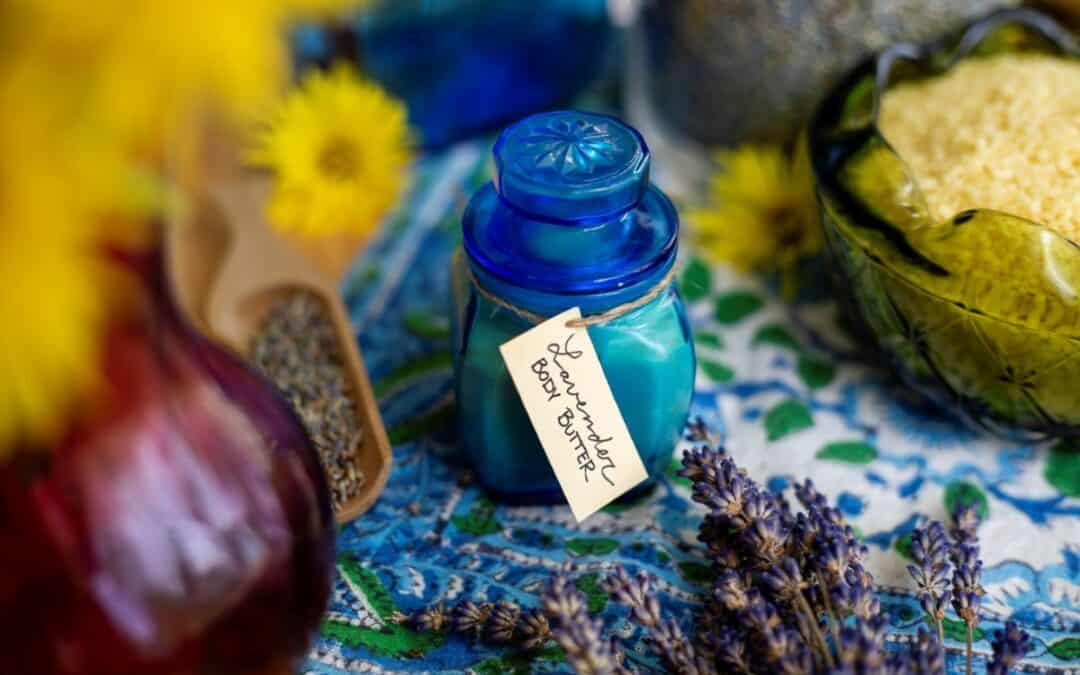
Healthy skin care starts with the ingredients you choose, and that’s why I make my own body care products at home! Store-bought moisturizers might look good on the shelf, but it’s time to get serious about what you put on your skin. Even the ‘natural’ stuff in the store is full of synthetic fragrance and endocrine-disrupting petroleum stabilizers to extend shelf life. In the long run, your skin can end up drier or more reactive and the truth is, synthetic skin care is toxic.
I started buying lotions when I was in grade school. I remember spending my allowance on them!. I kept 3 or 4 lotions on my dresser and had strawberry, green apple, vanilla and all the cool scents. (Oh, and all the products were in glass jars, no plastic!) Later on, my mom and I got into Nivea body cream, which is a petroleum-based product. It was a little more expensive and we felt like we were really taking special care of ourselves.
When I look at the ingredients of those body lotions now, all I can say is, “Wow!” I am glad I am no longer rubbing toxins into my skin and I now love making my own body care products.
The Clean Beauty Movement
The term “clean beauty” has gained popularity in recent years, and there’s a lot of marketing hype around those words. However, just like the word ‘natural’, there aren’t any laws around clean beauty and anything can be marketed as such.
A cornerstone concept in authentic clean beauty is biocompatibility, how well ingredients interact with our body systems. Plant-based ingredients like lavender have evolved alongside humans for millennia, and our bodies generally recognize and know how to process them.
In contrast, many synthetic ingredients are new to human biology and can trigger immune responses and interfere with natural detoxification pathways. By choosing natural, biocompatible ingredients, we’re working with our body’s intelligence rather than against it. (Yay for our herbal studies!!)
At its core, clean beauty is about choosing products with non-toxic ingredients that support both skin health and overall wellbeing. True clean beauty isn’t just about what’s excluded (parabens, sulfates, phthalates) but also about what’s included: natural ingredients that work in harmony with your body’s natural processes rather than disrupting them. This is why making your own body care products is so satisfying. You have control over what touches your skin (and save money!)
Understanding Endocrine Disruption from Body Care Products
What many people don’t realize is that conventional body care products often contain endocrine disruptors also known as xenoestrogens, synthetic compounds that mimic estrogen in the body. Unlike natural hormones, these chemicals bind to estrogen receptors but trigger inappropriate responses, disrupting your body’s delicate endocrine system.
Common xenoestrogens in personal care products include:
- Parabens (used as preservatives)
- Phthalates (found in synthetic fragrances)
- Benzophenones (UV filters in products with sun protection)
- Triclosan (antimicrobial agents)
When absorbed through your skin, these compounds enter your bloodstream. They disrupt normal hormonal function by blocking natural hormones from binding to their receptors. They also interfere with hormone transport and metabolism, causing serious imbalances over time.
The Hidden Health Toll of Xenoestrogens
Additives like parabens and artificial scents often cause irritation or allergies. Phthalates absorb through the skin and can interfere with hormone balance. When you’re using these day after day, the buildup can take a toll.
The potential health impacts are more serious than many realize:
- Reproductive issues including menstrual irregularities and fertility problems
- Metabolic disruption that can affect weight and energy levels
- Neurological effects including mood disorders related to hormonal imbalance
The problem is that many apply these products multiple times a day, contributing to consistent exposure that compounds over time. The “cocktail effect” of multiple xenoestrogens working together can be more harmful than individual exposures .The cumulative exposure to multiple xenoestrogens from various products, is also called “body burden”. Our body doesn’t have the full metabolic capacity to degrade and get rid of endocrine disruptors and they accumulate in fat tissue over time contributing to an overall body burden.
Now the Good News! And Why Lavender is My Go-Alternative
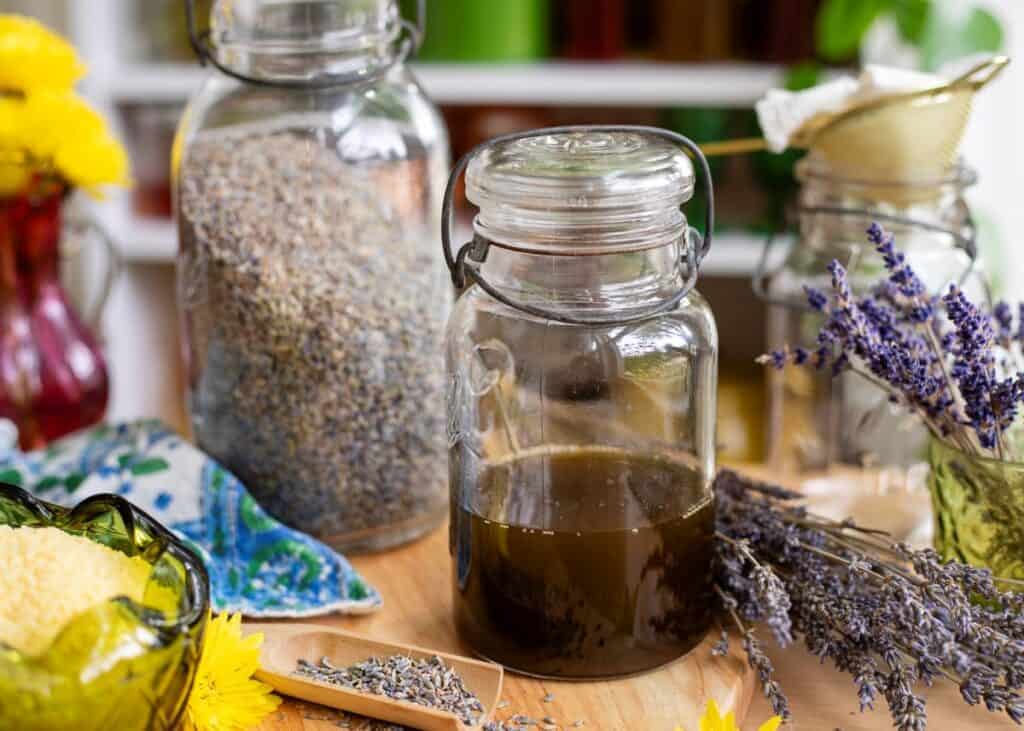
Lavender has consistently been the plant I pick when my skin needs some extra love. With this body butter recipe, you’re working with simple ingredients that you don’t have to worry about disrupting your biology.
Benefits of Lavender (Lavandula spp.)
Mostly known for its relaxing aroma, lavender is also considered a vulnerary. Vulnerary herbs enhance healthy skin regeneration and help skin recover from occasional scrapes, burns, and other wounds.
People have relied on lavender for bites and dryness for ages. Putting lavender oil on a fresh bug bite is a great way to help calm the sting.
Lavender contains oils like linalool and linalyl acetate, which give it antimicrobial and antifungal properties. These compounds keep skin healthy without stripping away its defenses. That’s very different from the harsher chemicals in many commercial products. It’s one of the reasons I love making herbal skin care and especially this lavender whipped body butter.
Choosing the Right Lavender for Your Skin Care
If you’re growing lavender to use in oils or body care, variety matters. Some kinds are better as ornamentals, while others perform well in herbal preparations.
English lavender (Lavandula angustifolia) is the one I recommend most often. It has that familiar scent and is gentle enough for everyday use. Spike lavender (Lavandula latifolia) is stronger. It offers more antimicrobial action, but the aroma is sharper and more medicinal.
Plant nurseries also sell lots of hybrids and ornamental types. They can be gorgeous, but some of them barely smell at all.
If your goal is to make butters, oils, or salves, stick with lavender varieties that carry both fragrance and a track record in herbalism.
Taking Control of Your Skin Health
By making your own body butter with natural ingredients like lavender, you’re not just creating a product that smells nice, you’re actively protecting your endocrine system from disruption. This simple change in your personal care routine can be a significant step toward reducing your overall “body burden” of hormone-disrupting chemicals.
Love your skin! It deserves care that truly nurtures it, not products filled with chemicals that could compromise your long-term health.
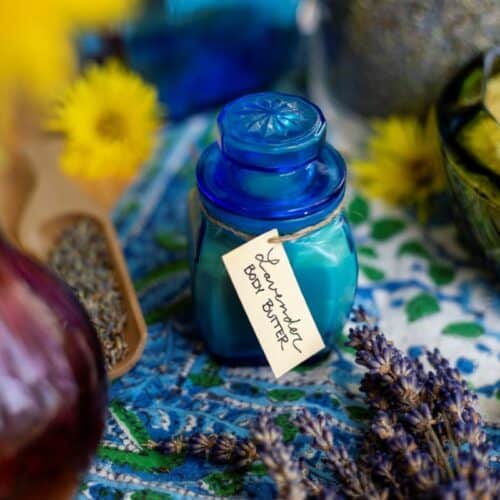
Lavender Whipped Body Butter Recipe
Ingredients
- 5 g beeswax
- 45 g shea butter
- 50 g lavender (Lavandula spp.)-infused oil
Instructions
- Grate your beeswax or use beeswax pearls. Weigh the appropriate amount of wax on a kitchen scale.
- Set-up or create a double boiler.
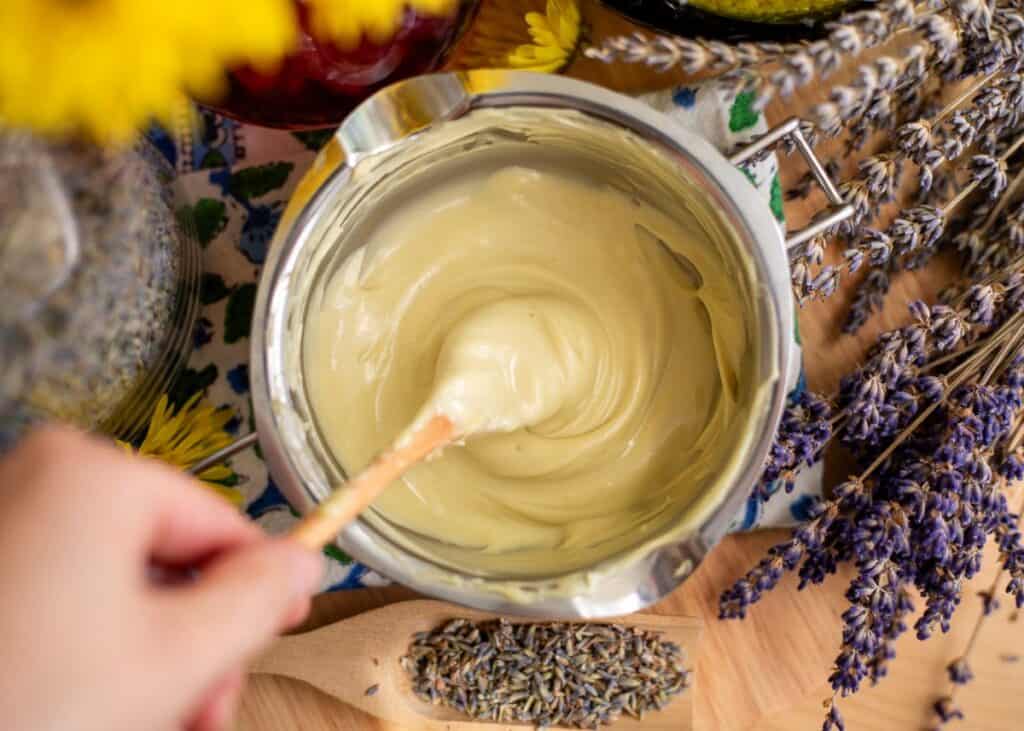
- Add the wax and shea butter to the double boiler and heat until melted. Stirring occasionally can help keep the shea butter from overheating on the edges as it goes from solid to liquid. Be sure the wax is fully melted, or the butter may turn grainy.
- Reduce the heat on the stove to the lowest setting while gradually adding the oil. Stir continually.
- Slowly add your lavender-infused oil a bit at a time until the oil, butter, and beeswax are thoroughly mixed, then remove from the heat.
- Continue stirring while cooling. Shea butter can separate causing a grainy texture if not stirred throughout the cooling process. You will know when it’s cool enough to stop stirring because it will seem to turn more solid abruptly and stirring will leave a trace on the top of the butter.
- Use a spatula to transfer it to sanitized jars.
- Let the jar sit on the counter until the body butter is completely cooled, then put the lid on the container.
- Make a label. List the ingredients and the date the body butter was made. Think up a special name for this batch. Wipe the container well before putting the label on.
Notes
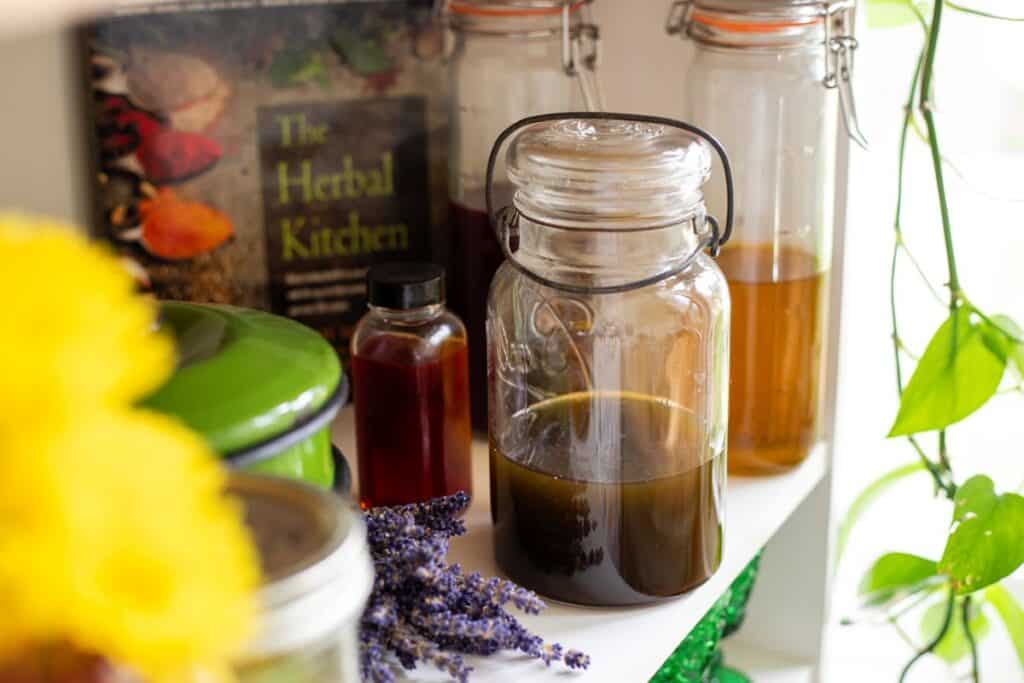
Play with Different Herbs in Your Body Butter
Once you’ve made this recipe, you can experiment with other botanicals. Lavender is a nice choice, but calendula, rose, chamomile, and elder flower infused oils also make great skin loving, body butter. Each has its own unique benefits. Try one by itself, or mix a few infused oils together until you find the right blend.
I don’t know if I can convey how much I enjoy my home made skin care body butter and salves. It is so satisfying to really know and understand the ingredients and I love the way my skin feels.
Skip the lotion aisle at the store, be aware of where xenoestrogens may be hiding in your cupboard and just throw away any skin care product that has endocrine disrupting petroleum ingredients.
If this recipe inspired you, come join me in my Handcrafted Healing Herbal Oils course. I created this course to help both beginners and experienced herbalists feel confident in their oil-making process. You’ll learn how to make more potent, extra-strength herbal oils you can use in salves, body butters, and all kinds of body care.
Let me know how you like your lavender whipped body butter!


I received some rendered deer tallow. I made a lotion with jojoba and almond oil added. then whipped. It melts easily on the skin and does not feel oily to me. Is there a downside to using deer tallow?
I don’t think there are downsides to using deer tallow. Just the difference in energetics and ease in rendering the two fats into tallow. I would think that deer tallow would be lighter and ‘drier’. Maybe it would absorb faster. Maybe I will have to try to render some next time I have access.