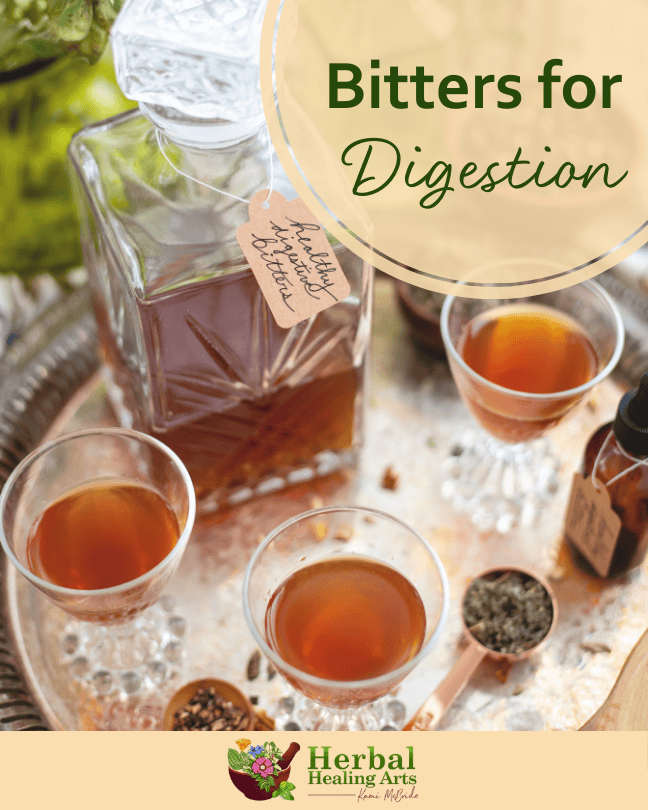
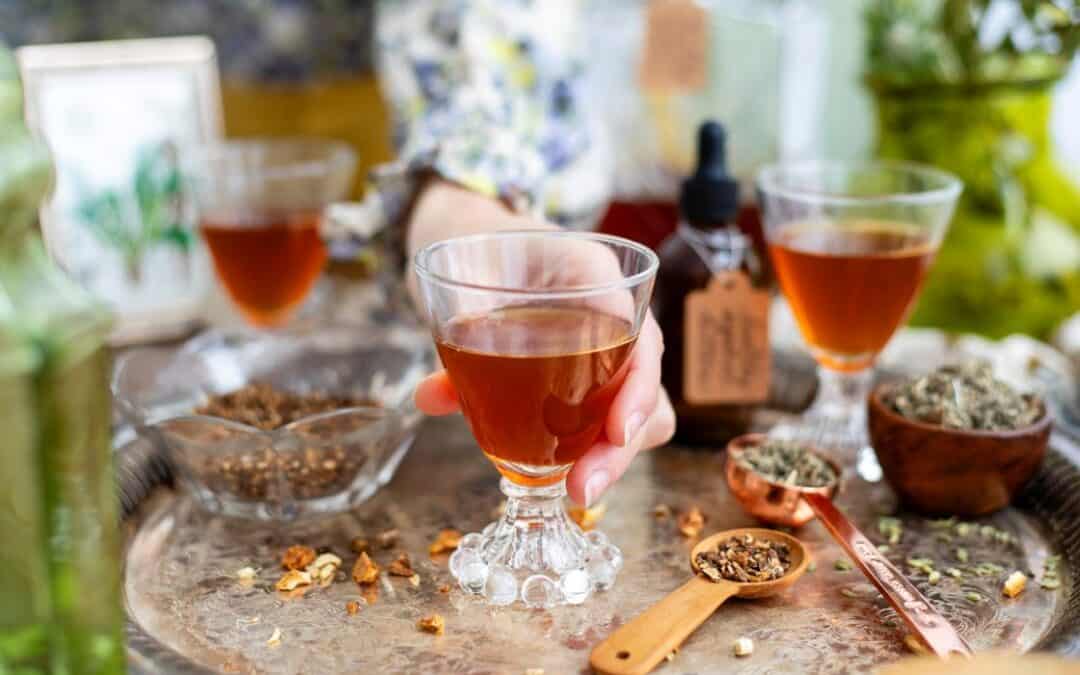
We use so many plants in the kitchen and in our home apothecaries, but the bitter ones are always fun to talk about. They were normal meals for a lot of our ancestors. They cooked with lots of bitter greens and roots. It was just part of what people ate. My Italian neighbor talks about his grandmother digging up dandelion roots every year, mincing them fresh and adding them to their salads.
I can’t even really think of anything that tasted bitter when I was growing up. Spinach? Is that bitter? That is about the extent of my childhood bitter exposure. I had ZERO taste for bitters when I started studying herbs. But I was all in as an herb student and jumped onto the bitter wagon. My body quickly remembered this gift from the plants and NOW I CRAVE bitters! I have now had bitter tonics as a regular part of my diet for 35+ years. Sometimes when I travel, I forget my bitter tonics and I definitely notice a reduction in my digestive capacity and my energy!
What Are Bitter Herbs?
Bitter herbs are simply plants that taste, well… bitter. That flavor tells your body it’s time to start digesting by increasing saliva and encouraging the liver and gallbladder to release bile, which helps break down fats.
There are a variety of bitter herbs. Some are mild enough to toss in a salad or brew into a tea, while others are stronger and used best in small amounts in preparations such as tinctures. They all have their own personality when it comes to bitterness, and your body responds to each one differently.
One thing my students notice right away is how quickly bitters seem to work. Even a tiny bit can get the digestive system to do what it needs to do.
Examples of Bitter Herbs
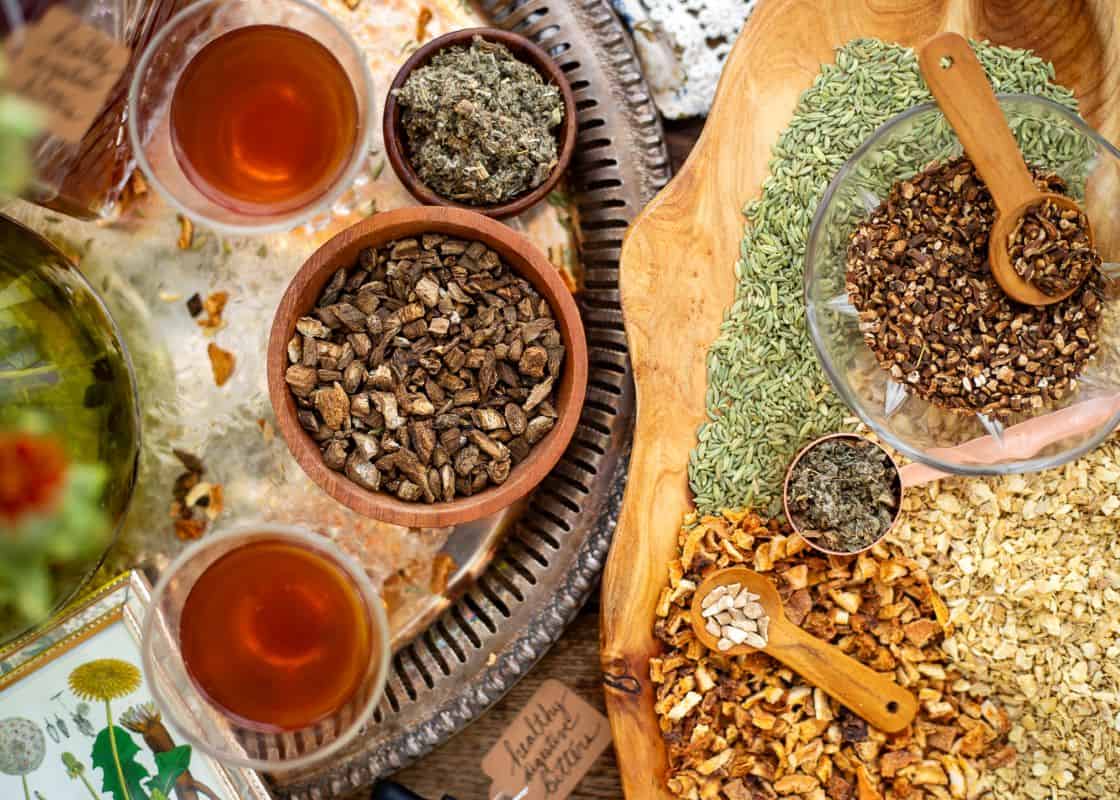
Here’s a list of common bitter herbs I like to introduce to students who are learning about digestion.
Dandelion (Taraxacum officinale) Root
When you hear the word “dandelion” you may think of a weed in your yard, but it was actually brought from Europe as both food and medicine. The root has a strong bitterness that helps your body handle fats and heavier dishes. The leaves are milder, so I’ll throw them into my meals like in salads or a quick sauté. You can use the root dried, roasted, as a tincture, or as a tea. And if you harvest it yourself, make sure the area hasn’t been sprayed. The roots will soak up everything from the soil.
Burdock (Arctium lappa) Root
Burdock root has a subtle bitter flavor that a lot of people find simpler to work with than other herbs. It’s naturally rich in inulin, which feeds the good bacteria in the gut. A little tidbit I love about this herb is its clingy burrs that grab onto clothes and dog fur inspired the invention of Velcro! The root is usually harvested in its first year while it’s still tender. From there you can dry it, cook with it, or add it to a blend like the recipe below.
Yellow Dock (Rumex crispus) Root
Sometimes yellow dock is just what you want after a heavier meal. A small taste gets bile moving, making fats easier to process and the bowels function better too. If you slice a fresh root, you’ll see why it’s named the way it is. The inside is a deep, golden yellow.
Artichoke (Cynara cardunculus) Leaf
When we talk about eating an artichoke, we usually think of what we buy at the grocery store, which is actually the flower buds before the buds bloom. We normally eat the fleshy base of the petals called leaves and heart. But let’s go a step further and see how to use the leaves of the plant, not the flower. The large plant leaves are bitter and used in herbal medicine. The bitterness of the artichoke plant leaf is bright and intense, and its carminative properties help ease gas and bloating.
Fennel (Foeniculum vulgare) Seed
Fennel seed is one I pull out when someone in the house is feeling gassy. It has a sweet, anise-like quality and acts as both a bitter and a carminative. The aromatic oils help relax the digestive muscles and help gas pass more comfortably, this is why various cultures chew the seeds after a meal. You’ll even see a dish of them at the host stand in Indian restaurants. You can chew on a few seeds or use them to make a simple tea. I often use them in an herbal bitters tincture, too.
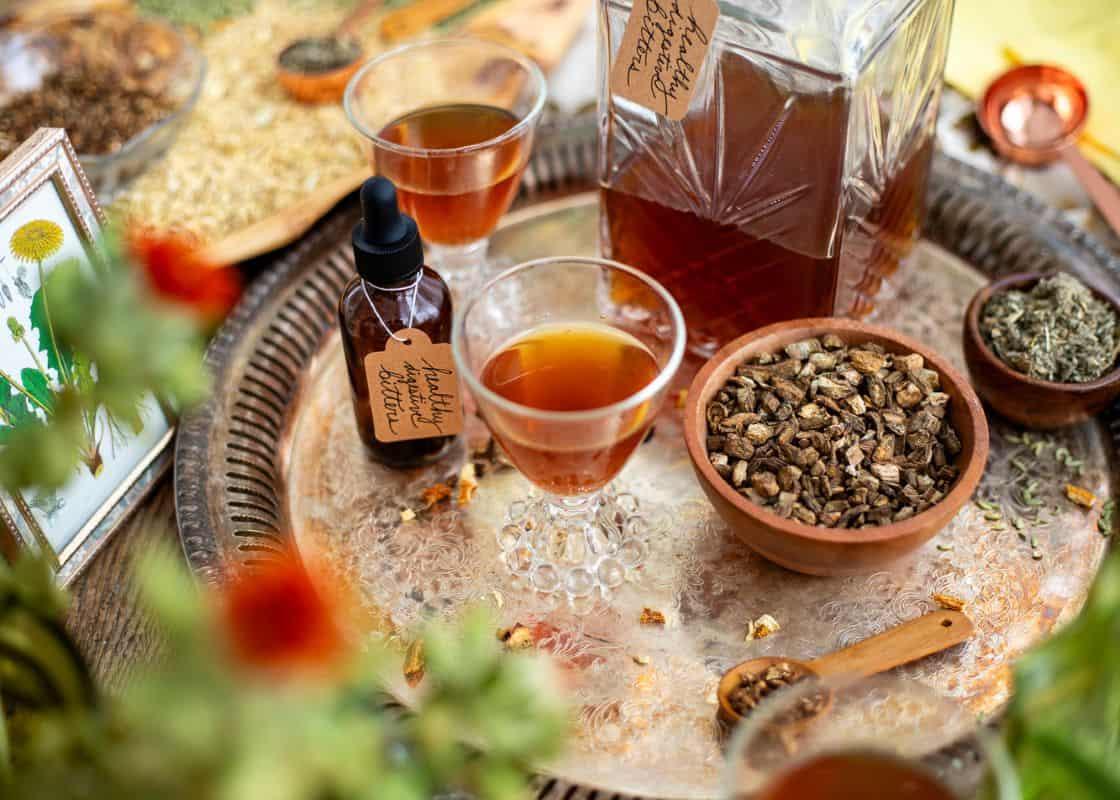
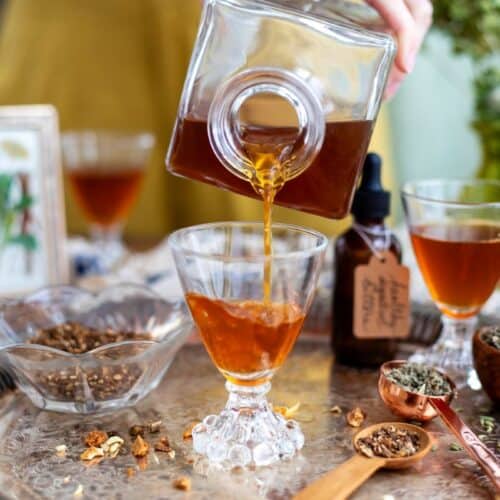
Herbal Digestive Bitters Recipe
Ingredients
- 3 parts burdock (Arctium lappa) root
- 2 parts dandelion (Taraxacum officinale) root
- 2 part orange (Citrus × sinensis) peel
- 1 part yellow dock (Rumex crispus) root
- 1 part artichoke (Cynara cardunculus) leaf
- 1 part fennel (Foeniculum vulgare) seed
- 1/2 part ginger (Zingiber officinale) root
Instructions
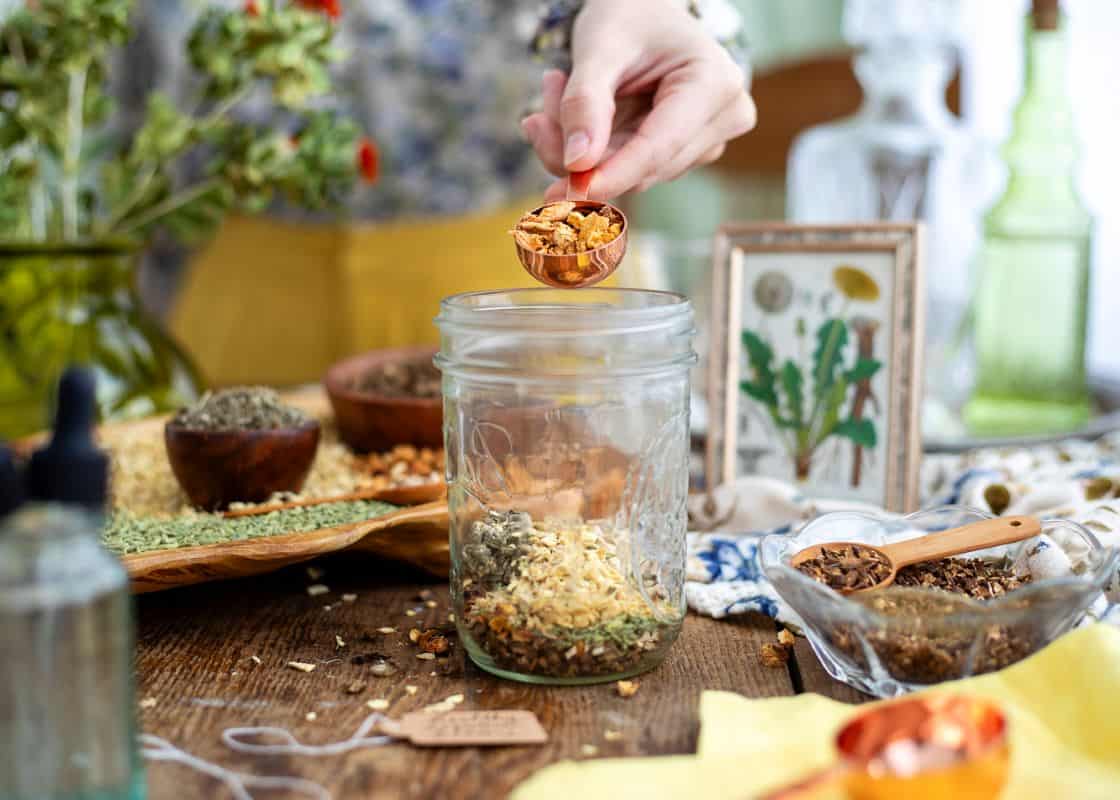
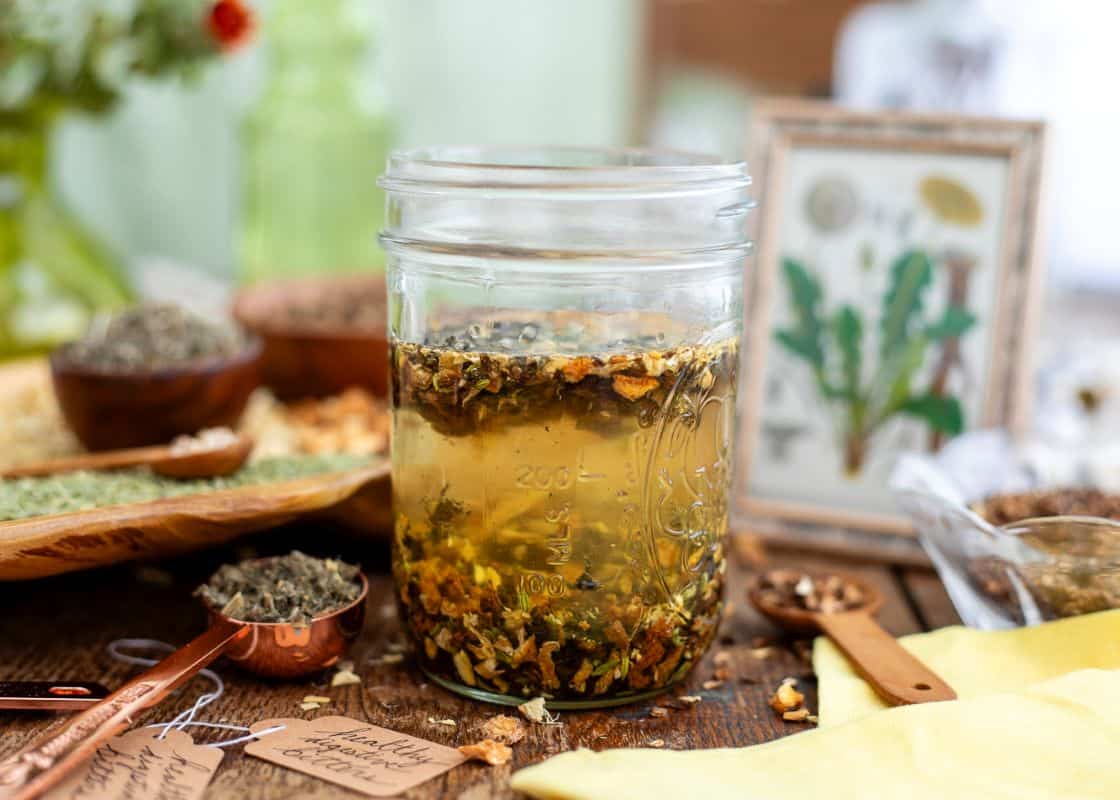
- Add all of the herbs to a clean glass jar.
- Cover completely with your menstruum of choice so the herbs are fully submerged.
- Cap the jar and keep it at room temperature for about four weeks.
- Give the jar a shake periodically.
- After 4 to 8 weeks, strain out the herbs.
- Transfer the finished bitter into a dropper bottle to use.
Notes
Taking Your Herbal Practice Further
This bitters blend is only one way to support digestion. One jar of tincture can open the door to so many practical things you can make for yourself and your family.
If you want to keep building those hands-on skills, that’s exactly what we do inside my online course, Herbal Kitchen Remedy Solutions. We go beyond digestion and explore immunity, stress, circulation, and all kinds of everyday remedies you can create at home.