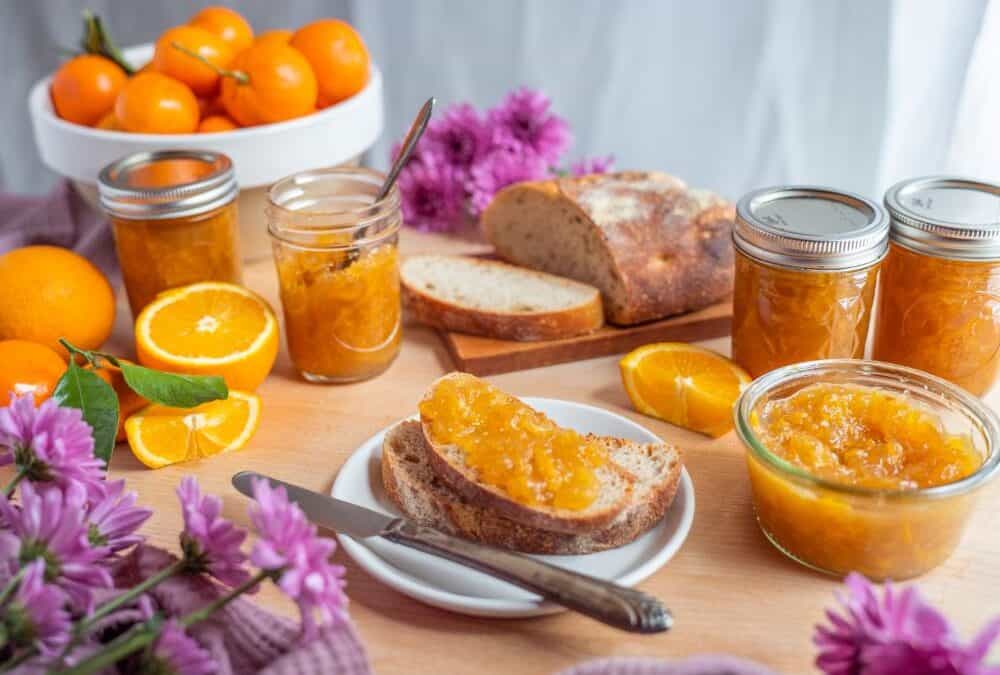
If you’ve ever had an abundance of citrus, you’ve likely looked up a marmalade recipe. In theory, making our own preserves is a wonderful way to minimize food waste and remind our taste buds of summer during the chilly, dark months. But just about any recipe you find calls for 6-8 cups of sugar to preserve a few oranges and lemons.
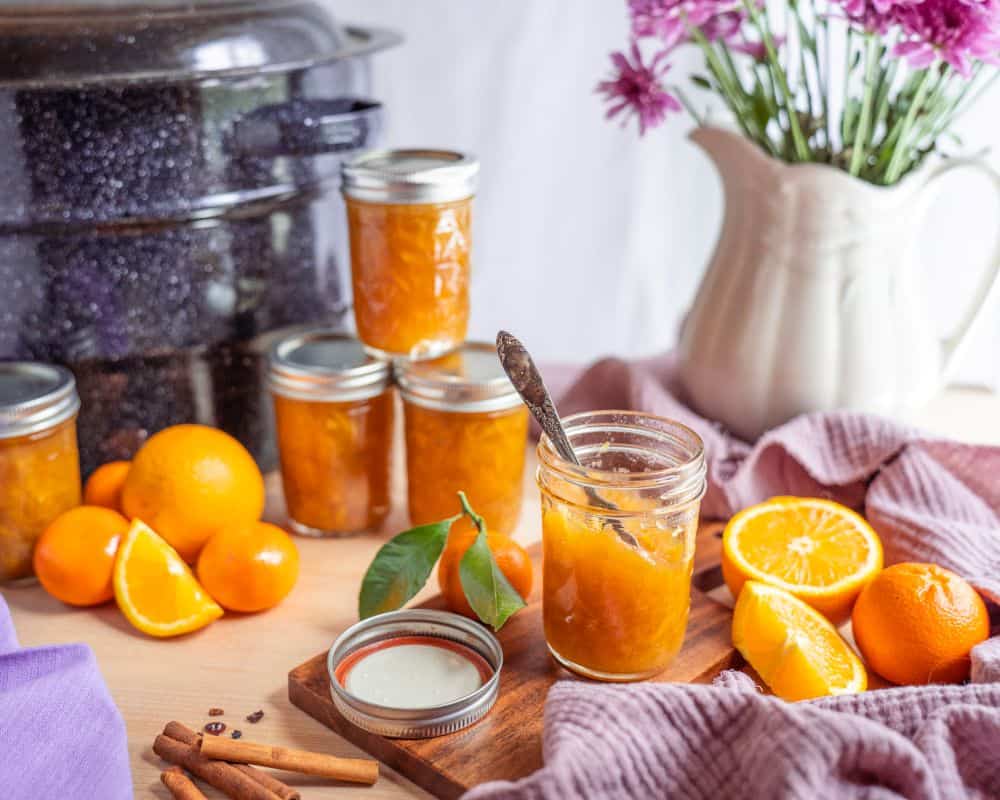
As a kid, we had a large orange tree in our backyard. We gave away bags of oranges and still couldn’t begin to eat them all, so my mom and grandma would make marmalade. It’s funny, I enjoy marmalade, but I only eat it in the winter, because that was the rhythm I grew up with. I don’t eat a lot of jams, but summer is for peach and apricot and winter is for marmalade! So for me, this is the perfect time of year to make it and I have good news! Using pure pectin, honey, and herbs, this twist on marmalade allows us to save that citrus flavor for a wintery day without compromising our health.
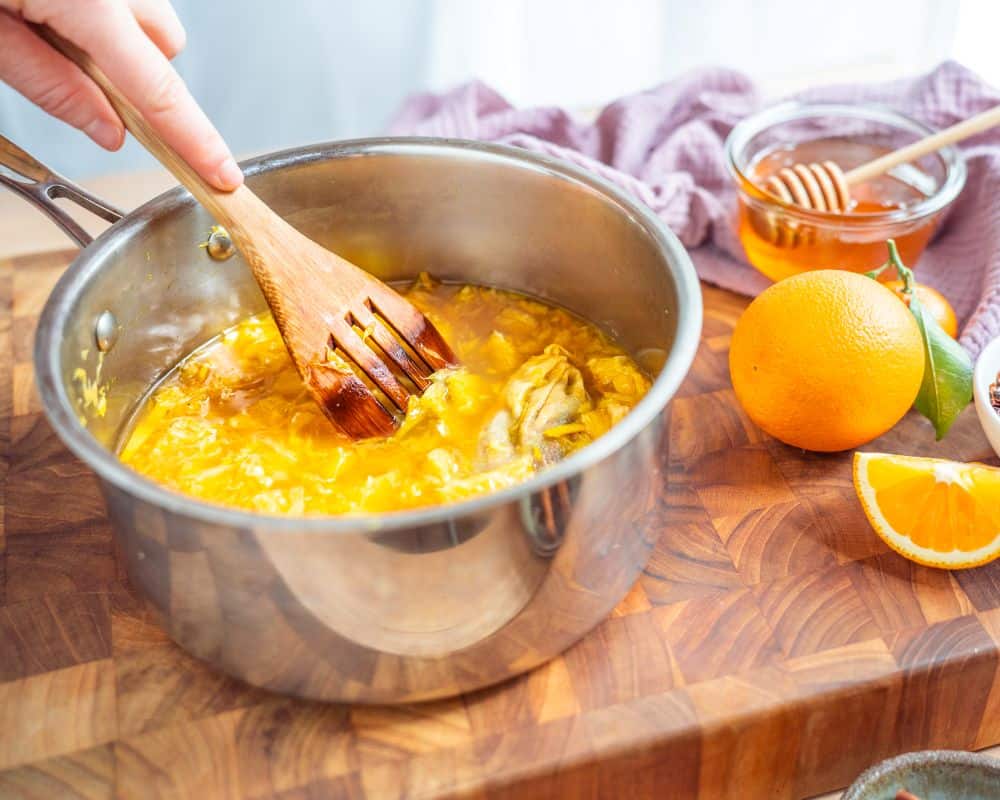
The method I use reduces the amount of refined sugar to zero without adding preservatives or fillers. It also increases the ratio of whole fruit to sweetener so that when you spread it on your morning toast, you’re getting mostly citrus. Adding rosehips and a few warming herbs, like cinnamon and cloves, enriches the flavor and energizes the digestive system.
What’s pectin? It’s a carbohydrate that occurs naturally in citrus and nourishes beneficial bacteria in the gut microbiome. In contrast, refined sugar tends to feed the pathogenic bacteria in the gastrointestinal tract. Because the added pectin in this recipe allows us to avoid refined sugar completely, there’s a double benefit for the gut.
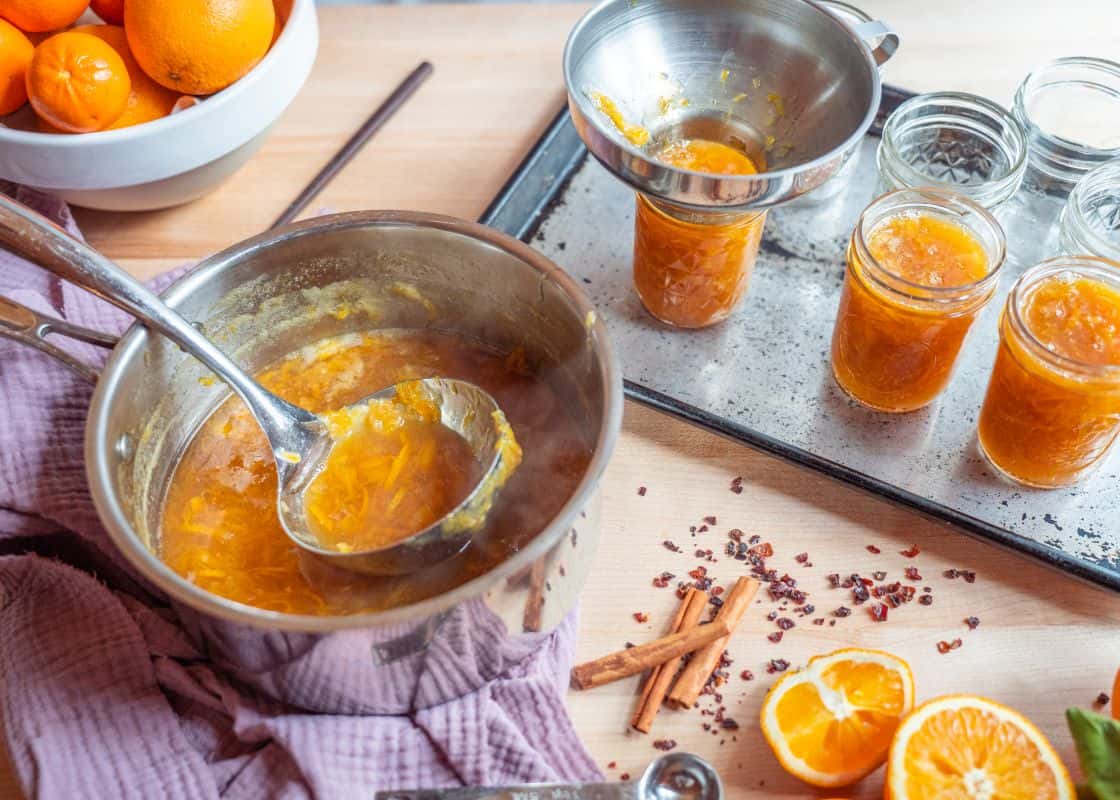
If you’re wondering about the natural sugars in honey, recent research suggests that honey acts as a prebiotic in the gut, helping to foster a healthy balance of microbial communities and ultimately reducing infection and inflammation. It’s still wise to eat any form of sugar in moderation, but a honey marmalade is certainly a health-giving alternative to anything we’d buy in the store. I normally don’t heat honey, but for marmalade, I would rather have heated honey than 8 cups of refined sugar.
This recipe has its roots in the orange marmalade template from Pomona’s Universal Pectin. I don’t usually suggest using specific brands, but Pomona’s is unique because it’s formulated to jell with minimal sweetener and contains no fillers or additives. In a pinch, Sure-Jell and Ball both make pectin products for low-sugar canning, but they do contain fillers.
Let’s explore some of the natural magic embedded in the fruit and herbs in this recipe.
Orange
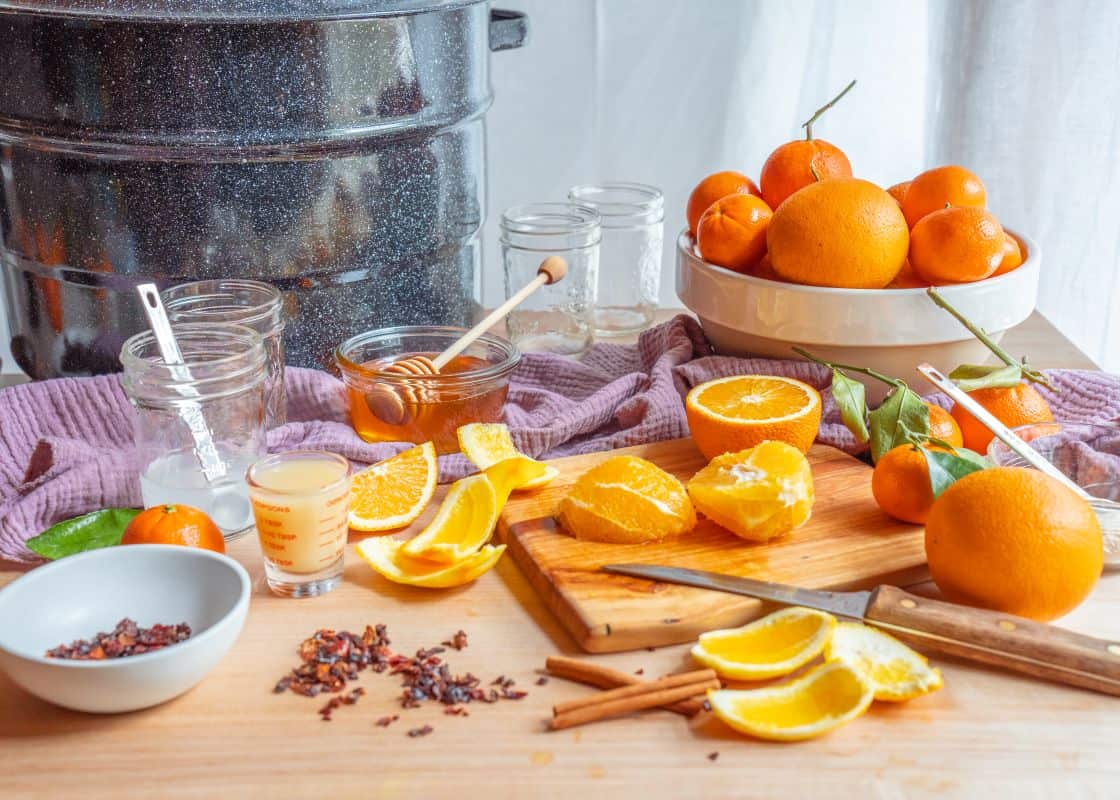
Citrus peels contain bioactive compounds that support the gastrointestinal, cardiovascular, and respiratory systems. They’re also one of the highest natural sources of pectin. As noted above, pectin fosters a healthy gut microbiome, which is essential to good digestion and overall good health. On a slightly disappointing note, although it’s tempting to believe marmalade would be packed with vitamin C, most of the ascorbic acid is destroyed in the long cooking process. Note that you’ll want to use organic oranges here to avoid synthetic pesticides.
Cinnamon
Cinnamon may help the body balance spikes in blood sugar, ultimately helping preserve sensitivity to insulin. Insulin resistance can be the first sign of more serious issues, indicating greater risk of developing type 2 diabetes, cardiovascular disease, nonalcoholic fatty liver disease and metabolic syndrome – all reasons to eat and drink sweets in moderation. Cinnamon’s flavor helps satisfy our taste buds, bringing a sweet-spicy depth to the marmalade.
Cloves
As with cinnamon, there’s wisdom in adding cloves to sweet dishes, from puddings to pies. In my experience, this bud of a tropical flower is an antidote to the mucus-forming nature of desserts. Cloves are also used to settle indigestion. Together, clove and orange are a classic aromatic combination, simultaneously refreshing and comfortingly warm. Think of the tradition in many European countries of pressing cloves into oranges to make pomanders in the depths of winter.
Rose hips
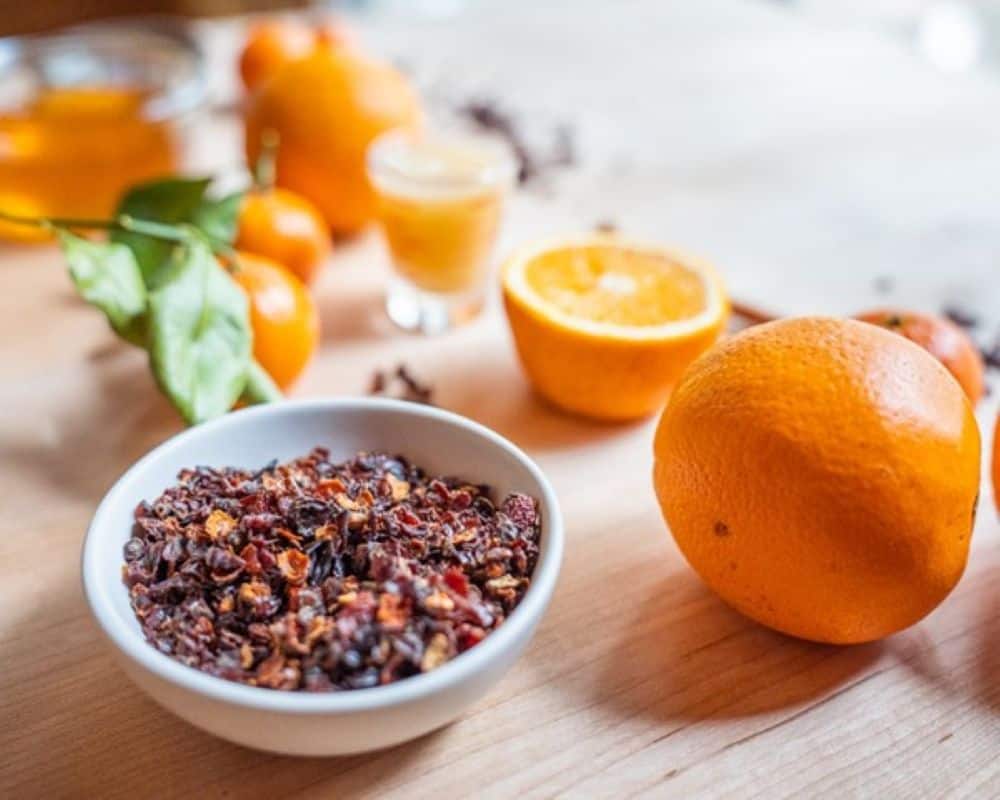
Rose hips, which bring a tart and slightly sweet flavor to this recipe are packed with minerals, including calcium, magnesium, potassium, sulfur, selenium, manganese, and iron. They also contain flavonoids that help support a healthy gut microbiome. Raw rose hips are rich in vitamin C, so adding them late in the cooking process, as suggested in this recipe, may increase the vitamin C in this marmalade, especially if they haven’t been dried using heat.
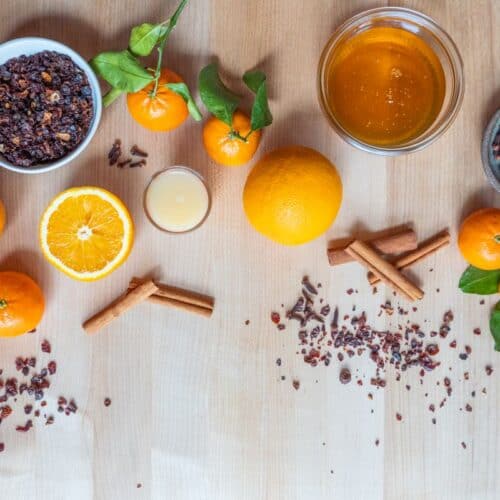
Honey & Herb Marmalade Recipe
Equipment
- Muslin tea bag, or cheesecloth and twine
- Small jar with lid for mixing calcium water
- 7 half pint (8 oz.) jars with airtight lids and bands for canning
- Water bath canner
- Small saucepan for the jar lids
- Paring knife
- Medium saucepan for cooking the marmalade
Ingredients
- 8 organic oranges (or 4 pounds of any citrus combination)
- 3 cups water
- 4 ½ tsp Pomona’s pectin powder
- 3 tsp calcium water (comes with Pomona’s pectin)
- 3 tbsp bottled lemon or lime juice
- 2 cinnamon sticks
- 2 cloves
- 2 tbsp dried rose hips (¼ cup fresh, deseeded)
- 1 ¼ cups honey, room temperature
Instructions
- Put the cinnamon sticks, cloves, and rosehips in a muslin tea bag or bundle them in cheesecloth and tie with twine.
- Prepare the calcium water by combining ¼ teaspoon calcium powder (the small packet in your box of Pomona’s pectin) with ¼ cup water in a small jar with a lid. Shake well.
- To sterilize the canning jars, place them in the water bath canner, fill ⅔ full with water, and bring to a boil. Turn off heat, cover, and keep in the water bath until ready to use.
- Sterilize the canning jar lids and bands by washing them with hot, soapy water and setting them aside to dry.
- Using vegetable peeler, peel 2 of the oranges. Chop the peels into 1-inch long, thin strips, then set them in a clean, medium-sized saucepan.
- Peel the remaining oranges and compost the peels.
- Gather all your oranges and remove seeds. Chop the inner fruit, keeping as much of the juice as you can. Combine the pulp and juices with the peel in the saucepan.
- Add the bag of herbs and 3 cups of water to the saucepan. Bring to a boil, then reduce heat and simmer, covered, for 20 minutes, stirring occasionally.
- Add the calcium water and lemon or lime juice to the saucepan, and mix well.
- Mix your honey with the pectin powder and set aside.
- Bring the fruit mixture to a full boil, then remove the bag of herbs.
- Add pectin-honey mixture to the marmalade, stirring vigorously for 1 to 2 minutes to dissolve the pectin while the marmalade returns to a boil. Once the marmalade returns to a full boil, remove it from the heat.
- Fill hot jars with the marmalade to ¼ inch from the top. Wipe the rims clean. Place the lid and band on, screwing until secure.
- Put filled jars into water bath canner (water will still be hot from sterilizing them), double-check that they’re covered with water, and bring to a boil. Boil 10 minutes (plus 1 minute for every 1,000 ft. above sea level).
- Remove from water and let jars cool.
- Check seals; lids should be sucked down.
- Eat within 1 year. Once opened, the marmalade lasts 3 weeks in the refrigerator.
- WHEW, I know that is a lot of steps, but it gets easier after you make it once and it is SO worth it!
Herbalizing your marmalade
I hope you’re inspired to try this honey and herb citrus marmalade. While the bulk of the recipe must be followed closely to ensure high acidity and low water activity in your preserves, you can certainly experiment with the herbs you choose to infuse in your water.
My mom didn’t make marmalade with cinnamon or rose hips, but this is how we weave herbalism into our daily rhythms, leading us ever farther down the path of a holistic lifestyle – not just for ourselves but for the generations to come.
Other herbs you can add to marmalade are sage, rosemary, or fennel seed. What herbs do you think would go well in marmalade?