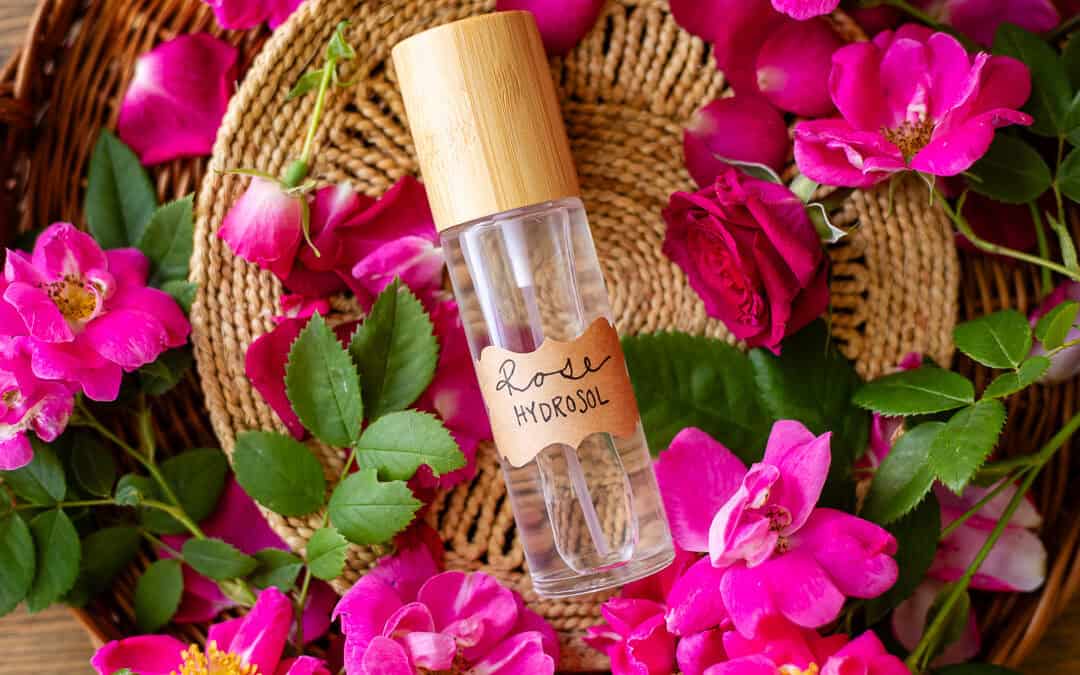
I look forward to rose season every year, and one of the easiest ways to enjoy them a little longer is by making rose hydrosol on the stovetop.
Rose hydrosol is one of my favorite things for summer skincare. It feels cool on hot skin, and you can make it at home with a stockpot and fresh, organic, unsprayed rose petals.
Michael Moore taught me this stovetop method. When I learned it, I felt I had been initiated into a secret society of magical potion makers. Mind you, this is 1991. There were no blogs, very few herb books, and only a handful of herb teachers at that time, and this simply was not common knowledge.
I have made rose hydrosol every year since then. I use it in my baths and foot baths. I keep it in my car to lift my mood while driving. I spray a few drops into the palm of my hand with some herbal-infused oil, rub it together, and use it as a face moisturizer.
I add splashes to my tea and herbal drinks, and also add it to baking recipes… shall I go on? This stuff is amazing, and it just increases the beauty quotient and quality of life…
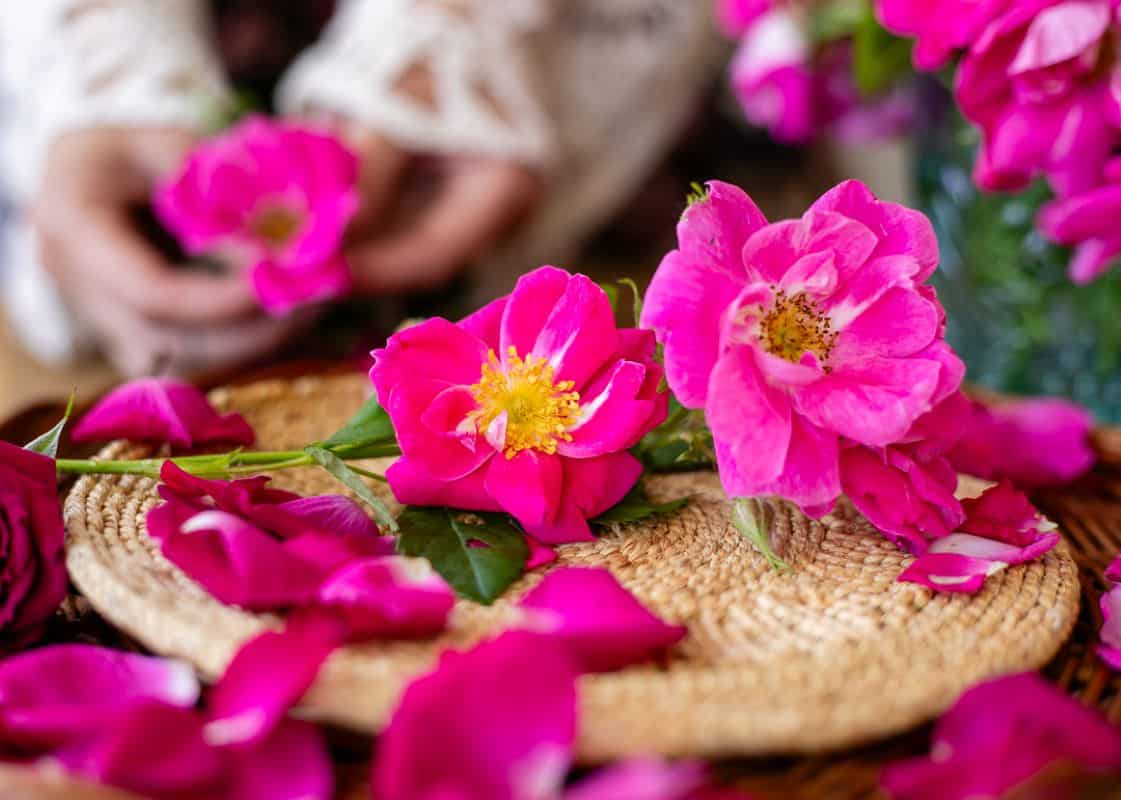
Rose (Rosa spp.) as a Cooling Herb
Roses don’t stay in bloom for very long, so I try to make the most of them while I can. Some become teas and mocktails, some go into infused oils, some get mixed into tallow body butter, and I always set aside enough petals to make rose hydrosol.
Herbalists have been making oils, lotions, rinses, and ointments with rose petals since ancient times. Early writers like Dioscorides described rose as cooling and astringent, qualities that herbalists still appreciate most about this beautiful flower to this day. I love how rose leaves my skin feeling fresh without drying it out, which is exactly what I want during the hottest part of the year.
Rose is also considered a vulnerary, an herb used to support the skin’s natural repair process. That’s another reason I like keeping rose hydrosol on hand after too much time in the sun.
What is a Hydrosol?
Hydrosols are made through steam distillation. The fresh plant material is gently steamed, and the vapor is collected as it cools. That vaporized floral water is the hydrosol. (You can find the full step-by-step process below.)
You may see hydrosols for sale at the store, but I’ve found that not every bottle is the real thing. Sadly, most are just essential oil mixed into water. A true hydrosol contains only trace amounts of the essential oil, and it will be labeled as “steam distilled.”
Using this stovetop method at home, you can make a wonderfully soothing and richly aromatic hydrosol that’s fantastic in skincare preparations.
Rose water is one of the most common hydrosols that you can still find; however, rose is just the beginning. When you make your own hydrosol floral waters, you can experiment with all sorts of different herbs, especially if you garden and have access to large quantities of fresh plant material. Some other lovely options are sage, peppermint, lavender, chamomile, and tulsi.
One of the great things about hydrosols is that you can mist it directly onto your skin without the same dilution concerns that come with essential oils. Because they’re so gentle, hydrosols are also safe to use with babies, pets, older adults, and anyone with sensitive skin.
Simple Stovetop Rose Hydrosol for Skin
Ingredients
- 4 to 5 cups fresh, organic rose (Rosa spp). Petals, unsprayed
- Large stockpot with lid
- Heatproof bowl
- Brick, ramekin, or small inverted pot (to elevate bowl)
- Ice cubes
- Water
Instructions
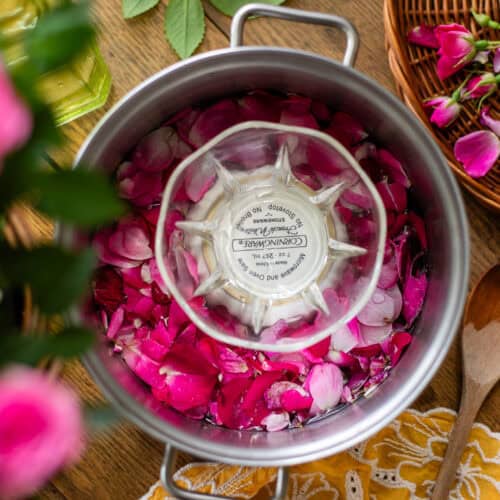
- Place a brick or ramekin in the center of a large stockpot
- Set a heatproof bowl on top (this will collect your hydrosol)
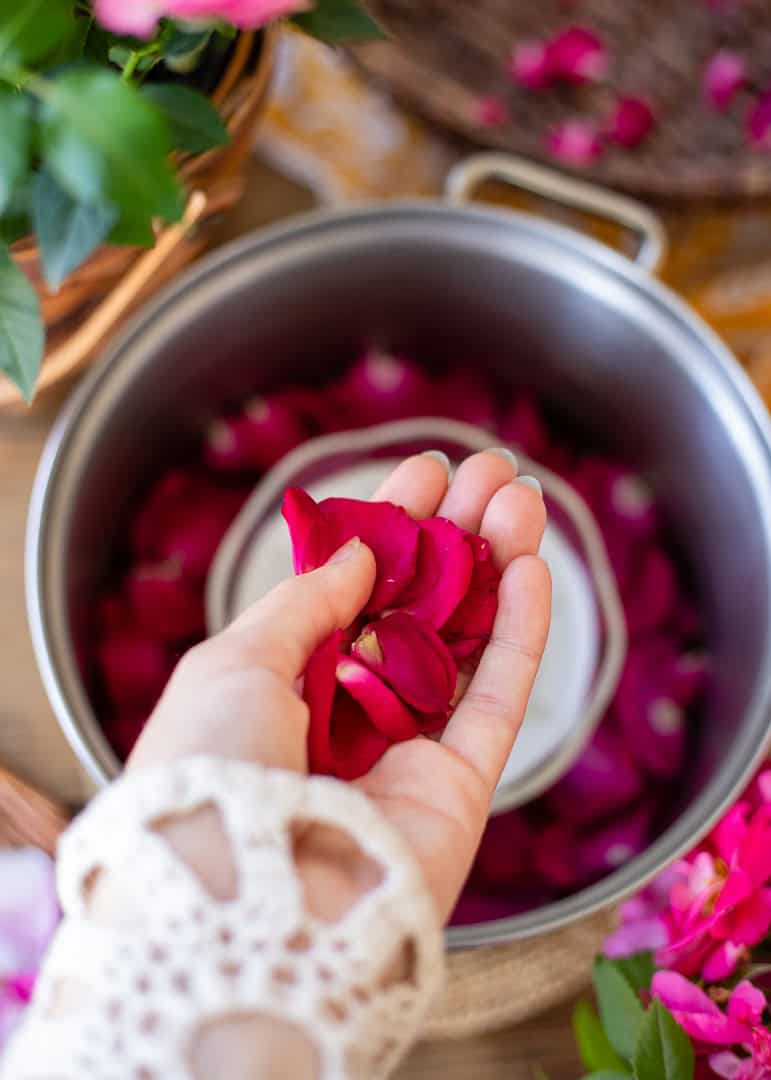
- Put rose petals in the pot around the bowl, not in the bowl. The amount of rose petals you need will vary based on the size of your pot. They should be lightly packed and reach near the rim of your elevated bowl.
- Add water to the pot, just enough to surround petals without spilling into the bowl.
- Place the pot lid upside down on the pot.
- Fill the inverted lid with ice to create condensation.
- Bring to a gentle simmer over low heat.
- As steam rises, it will carry the rose aroma, condense on the cold lid, and drip back into the elevated bowl.
- Simmer for 30-45 minutes, replacing ice as it melts (don’t skip this step!).
- Carefully remove the bowl and let the collected liquid cool.
- Transfer your rose hydrosol into a sterilized glass spray bottle.
- Store in the fridge and use within a few weeks for best freshness.
Notes
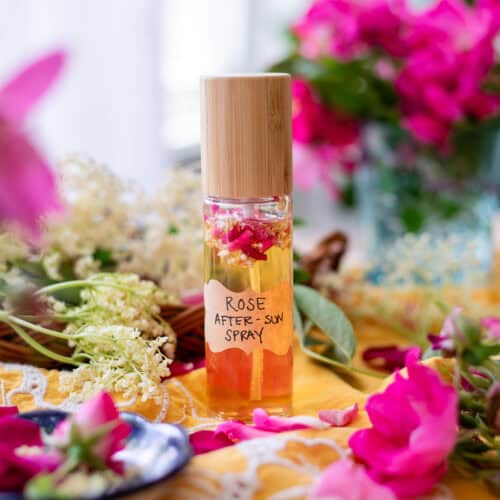
Rose After-Sun Spray
Ingredients
- ¾ cup apple cider vinegar
- ½ cup chopped fresh rose (Rosa spp.) petals
- ¼ cup chopped fresh elder (Sambucus nigra) flowers
- ¼ cup rose hydrosol
Instructions
- Fill a glass jar with chopped rose petals and elder flowers.
- In a glass jar, pour vinegar over the rose petals and elder flowers, filling the jar to the top with vinegar. Make sure that the vinegar covers the herbs by at least a couple of inches.
- If you’re using a metal lid, cover the opening of the jar with two sheets of wax/greaseproof paper to avoid corrosion, and then put the lid on (or use a plastic lid).
- Store vinegar in a cool dark place for one month to infuse. Shake it once in a while and occasionally check to see if you need to add more vinegar, as some of it may have been soaked up by the herbs. Add more vinegar if the herbs are sticking out above the vinegar.
- Place a funnel into the opening of a clean, sterilized jar and lay muslin over the top of the funnel.
- Pour the infused vinegar through the cloth and funnel into the clean jar.
- Discard the strained liquid ingredients into the compost. The liquid left behind is your herbal vinegar.
- Stir the rose hydrosol into the strained herbal vinegar.
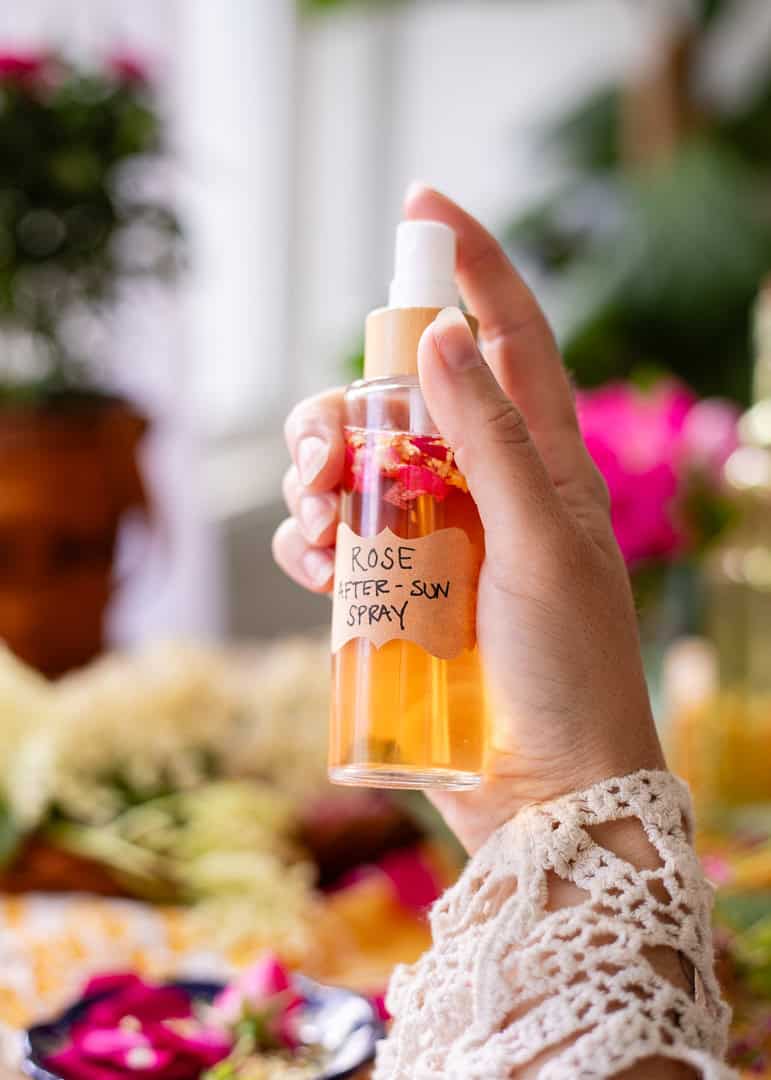
- Using a funnel, pour the mixture into a clean, sterilized dark glass spray bottle.
- Store in the refrigerator and use within 2 to 3 months for the best quality.
Other Ways to Beat the Heat with Herbs
Along with rose hydrosol and the after-sun spray, there are plenty of other ways to work with herbs during the warmer months.
You’ll find several of my go-to summertime recipes on my blog, including Cool and Calm Summer Tea, Lemon Verbena Lemonade, Cooling Herbal Tea with Hibiscus, Summer Peach Smoothie, and a Cooling Herbal Foot Soak.